icon
The story behind the program

Long-term monitoring of jack pine forests

The Wood Buffalo Environmental Association (WBEA) conducts long-term monitoring in the Regional Municipality of Wood Buffalo (RMWB) with a goal to understand the amount of pollutants being deposited into the jack pine forest and to understand if those pollutants are having an effect. This monitoring began from concerns raised by Indigenous communities in the late 90s about the potential for acid rain from oilsands operations to impact the forest ecosystem. This led to the development of the WBEA’s deposition and forest health monitoring programs. These programs continue to be built on collaboration between scientists, governments, Indigenous partners, and local communities. This ensures the monitoring is both scientifically rigorous and grounded in local knowledge.

Where we monitor

Monitoring across the Athabasca oil sands region

Monitoring occurs at remote sites across northeastern Alberta, in the Athabasca oil sands region. Monitoring sites were originally chosen based on distance from mineable oil sands emission sources to help understand regional deposition patterns.

  • Near-field (<25 km): Less than 25 km from mineable oil sands emission sources. Highest deposition rates, most direct industrial impact.
  • Mid-field (25–50 km): Between 25 and 50 km from mineable oil sands emission sources. Moderate deposition, transitional zone.
  • Far-field (>50 km): Greater than 50 km from mineable oil sands emission sources. Background conditions with less direct influence from industry.
How we monitor

Collecting air, soil, tree, and vegetation data

Forest health monitoring is done in jack pine ecosystems, as the soil in these tree stands was thought to be very sensitive to the input of acidifying compounds. All forest monitoring sites fit the same ecosystem criteria so data can be compared across the region.

Soil
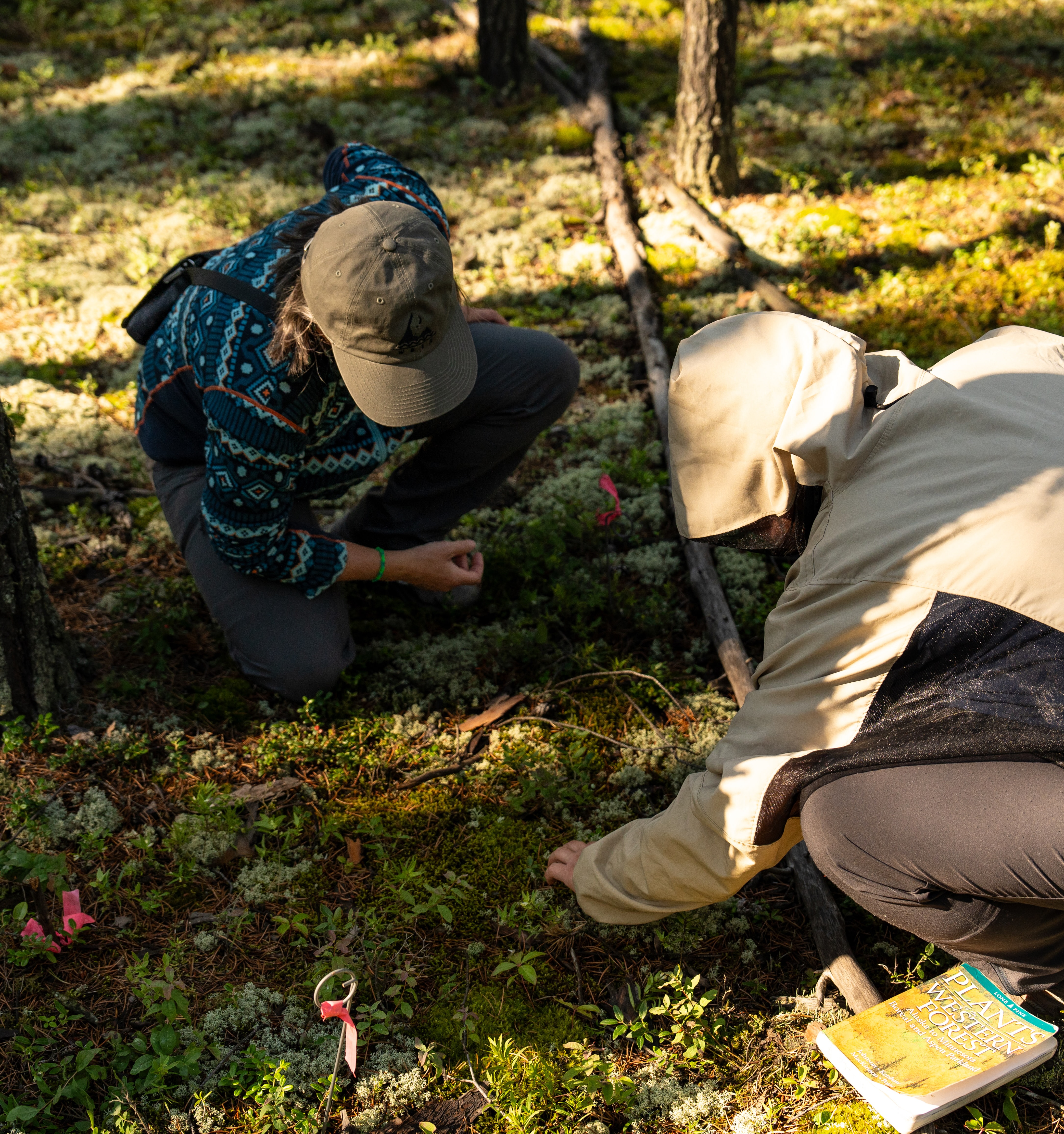
Understory Plants
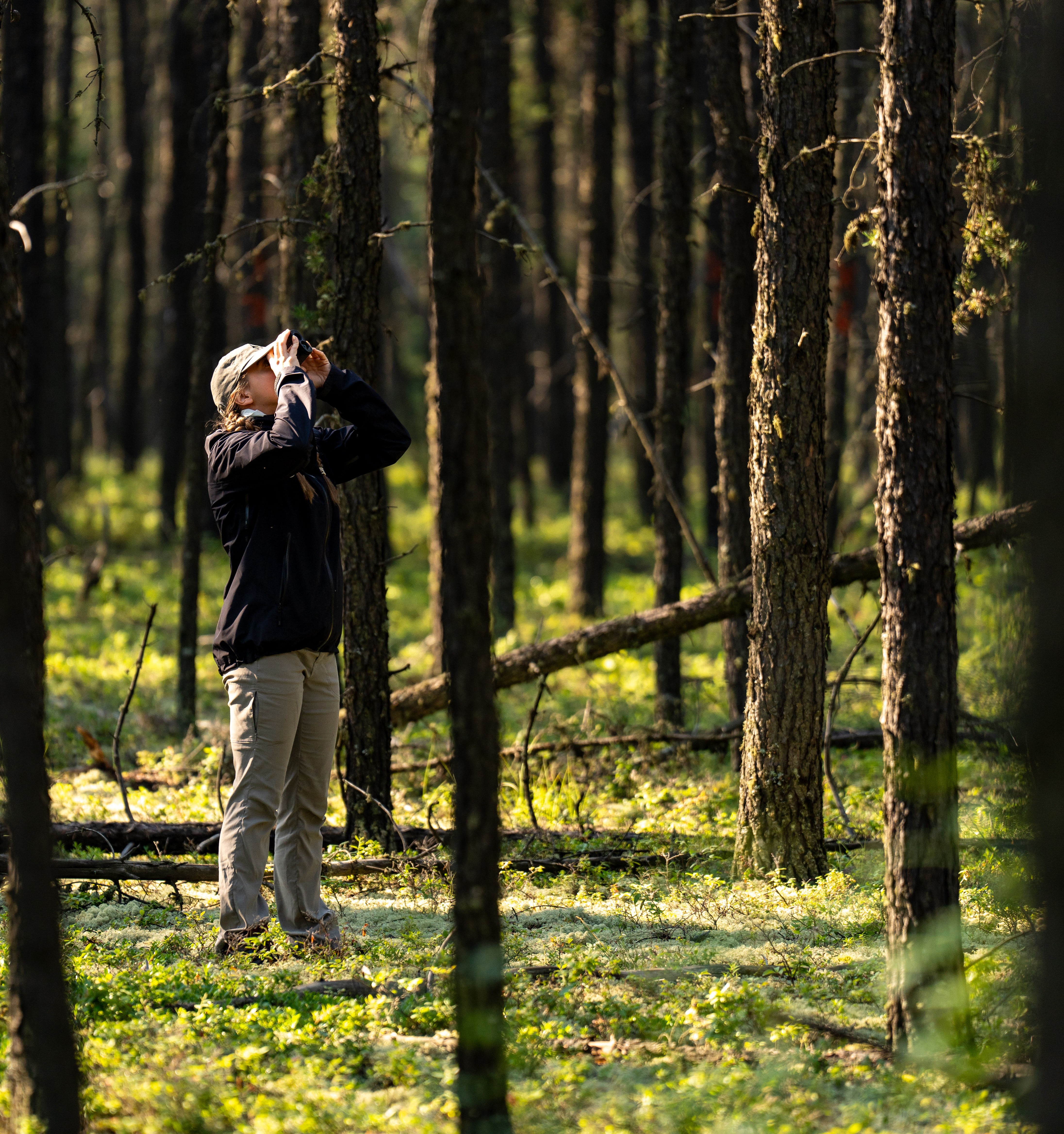
Trees
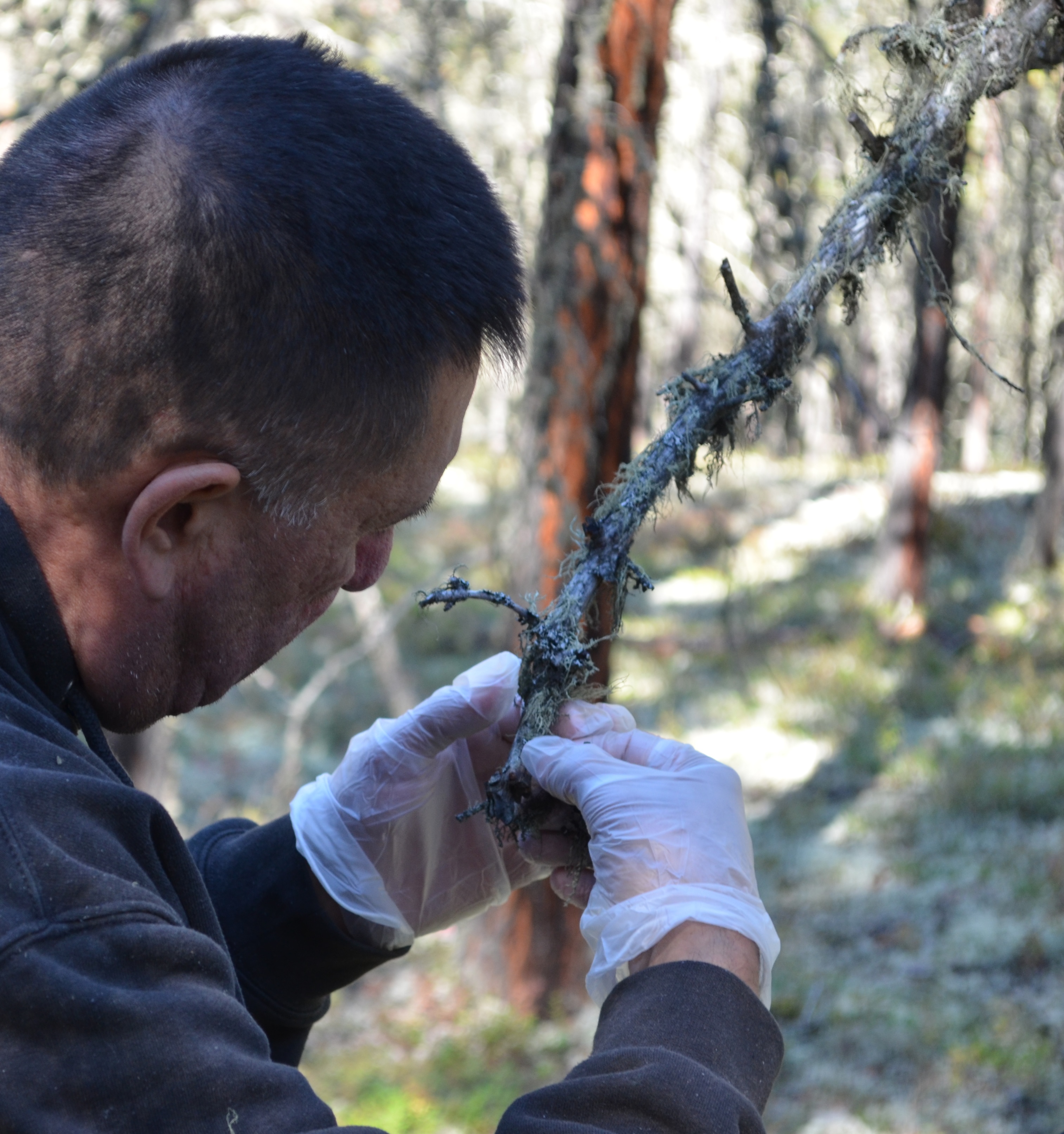
Lichen
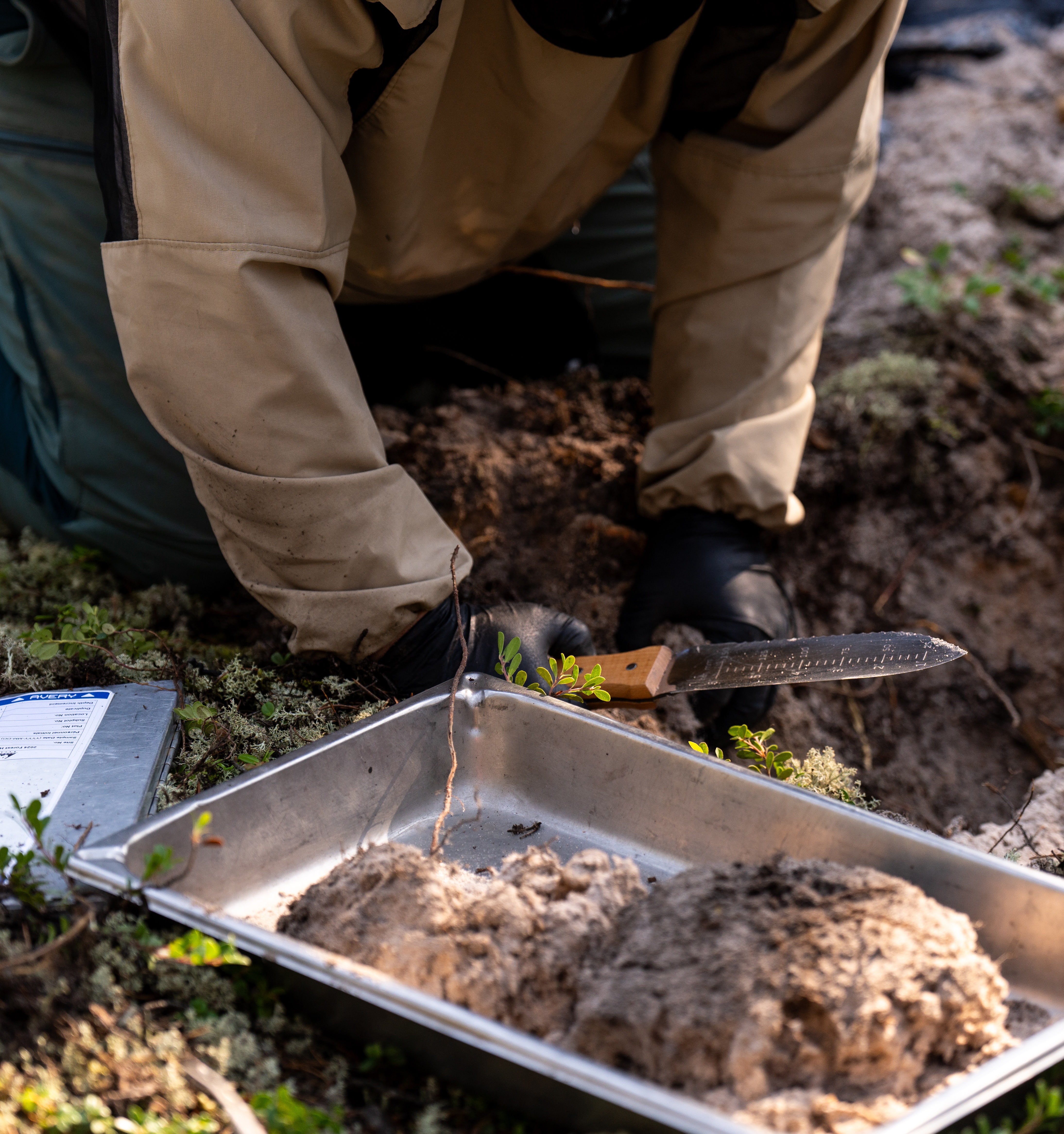
Soil is sampled by depth at each monitoring site for chemical analysis.
Plots are staked out on the forest floor and the amount of each species present in the plot is recorded.
Measurements such as height and diameter are collected to understand tree growth and needles are sampled for chemical analysis.
Samples are collected for chemical analysis as lichen get most of their nutrients from the air.
Soil is sampled by depth at each monitoring site for chemical analysis.
Plots are staked out on the forest floor and the amount of each species present in the plot is recorded.
Measurements such as height and diameter are collected to understand tree growth and needles are sampled for chemical analysis.
Samples are collected for chemical analysis as lichen get most of their nutrients from the air.
Soil
Understory Plants
Soil is sampled by depth at each monitoring site for chemical analysis.
Plots are staked out on the forest floor and the amount of each species present in the plot is recorded.
Soil is sampled by depth at each monitoring site for chemical analysis.
Plots are staked out on the forest floor and the amount of each species present in the plot is recorded.
Trees
Lichen
Measurements such as height and diameter are collected to understand tree growth and needles are sampled for chemical analysis.
Samples are collected for chemical analysis as lichen get most of their nutrients from the air.
Measurements such as height and diameter are collected to understand tree growth and needles are sampled for chemical analysis.
Samples are collected for chemical analysis as lichen get most of their nutrients from the air.

Deposition monitoring measures a broad range of pollutants using several different methods. Where possible, deposition monitoring is done at the same location as the forest health monitoring.

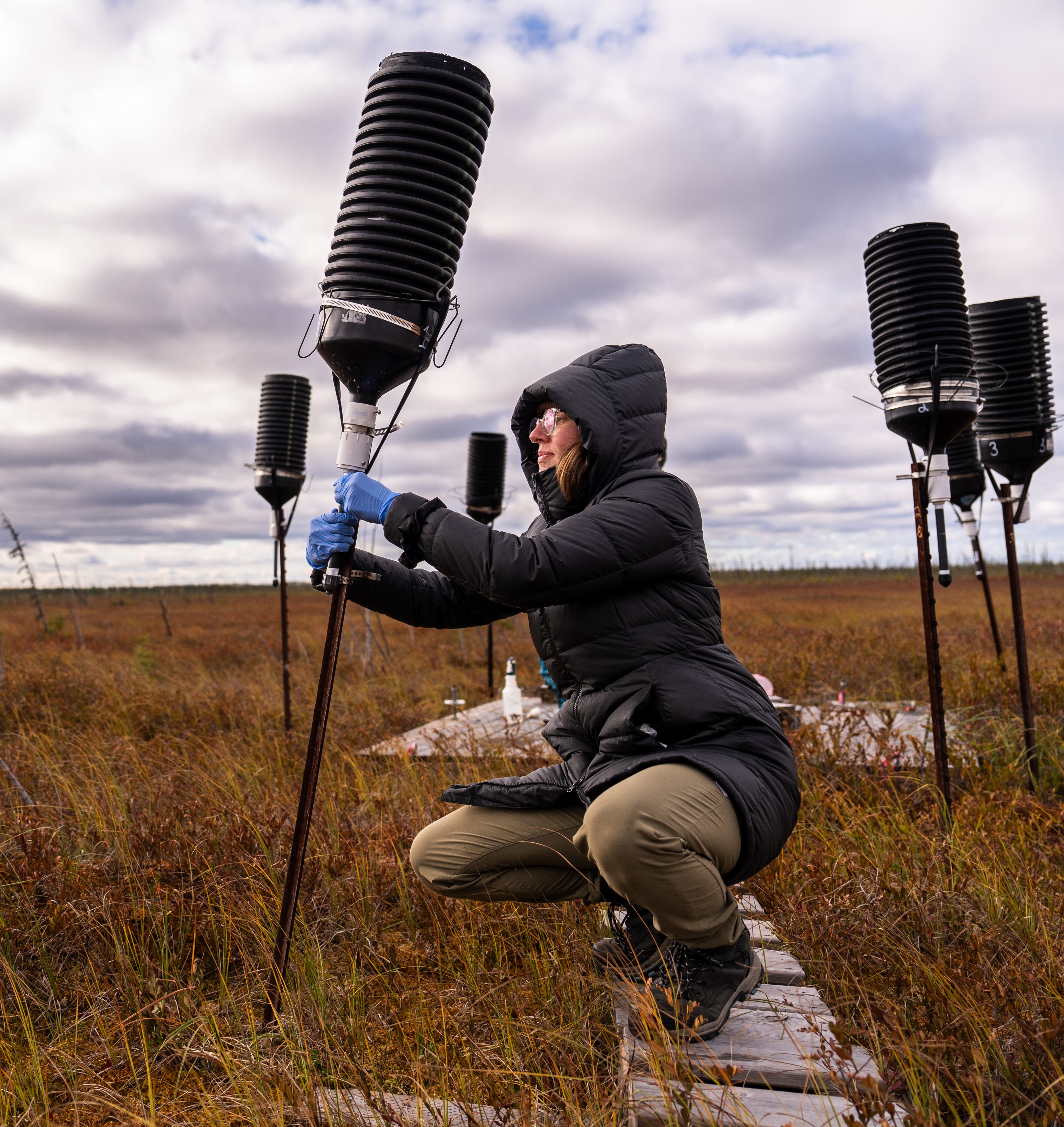
Sampling equipment that measures ions, such as base cations like calcium and sodium. The equipment is placed in both jack pine forest stands and in nearby open areas.
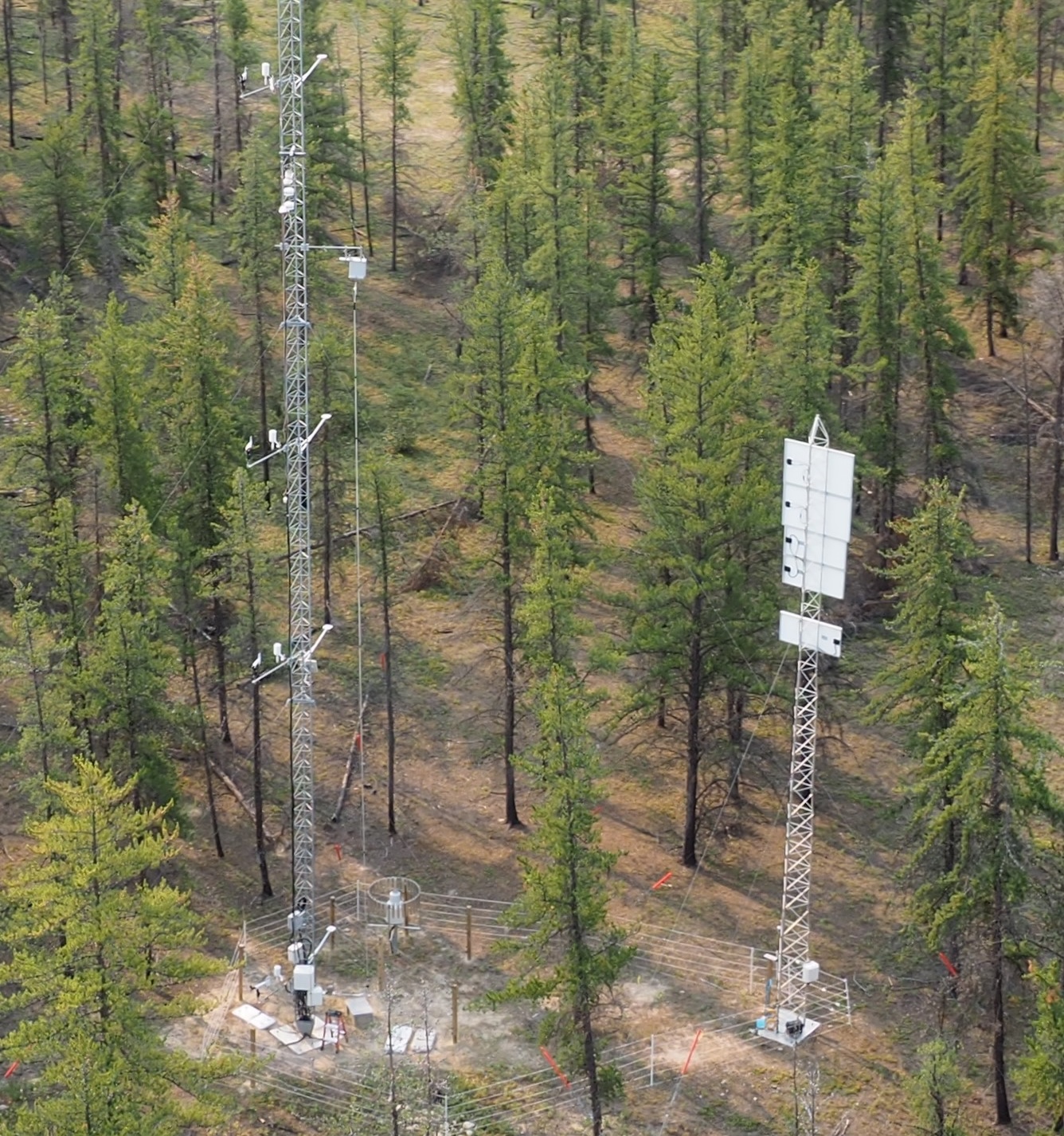
Sampling equipment that actively pulls in air and measures key atmospheric pollutants. The equipment is placed on tall towers.
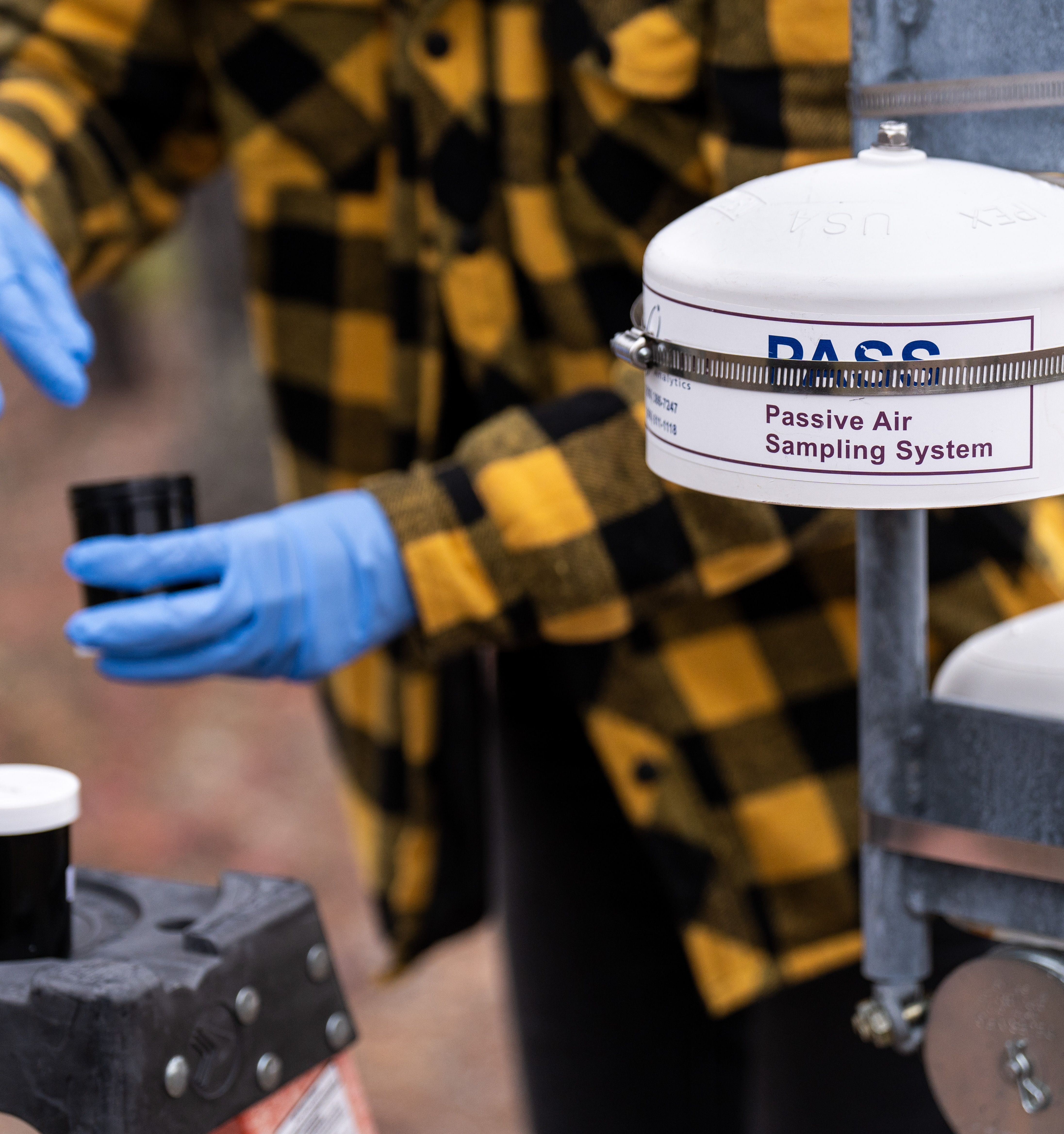
Sampling equipment that passively measures key atmospheric pollutants as air flows past a filter. The equipment is placed on tall towers near the denuders.
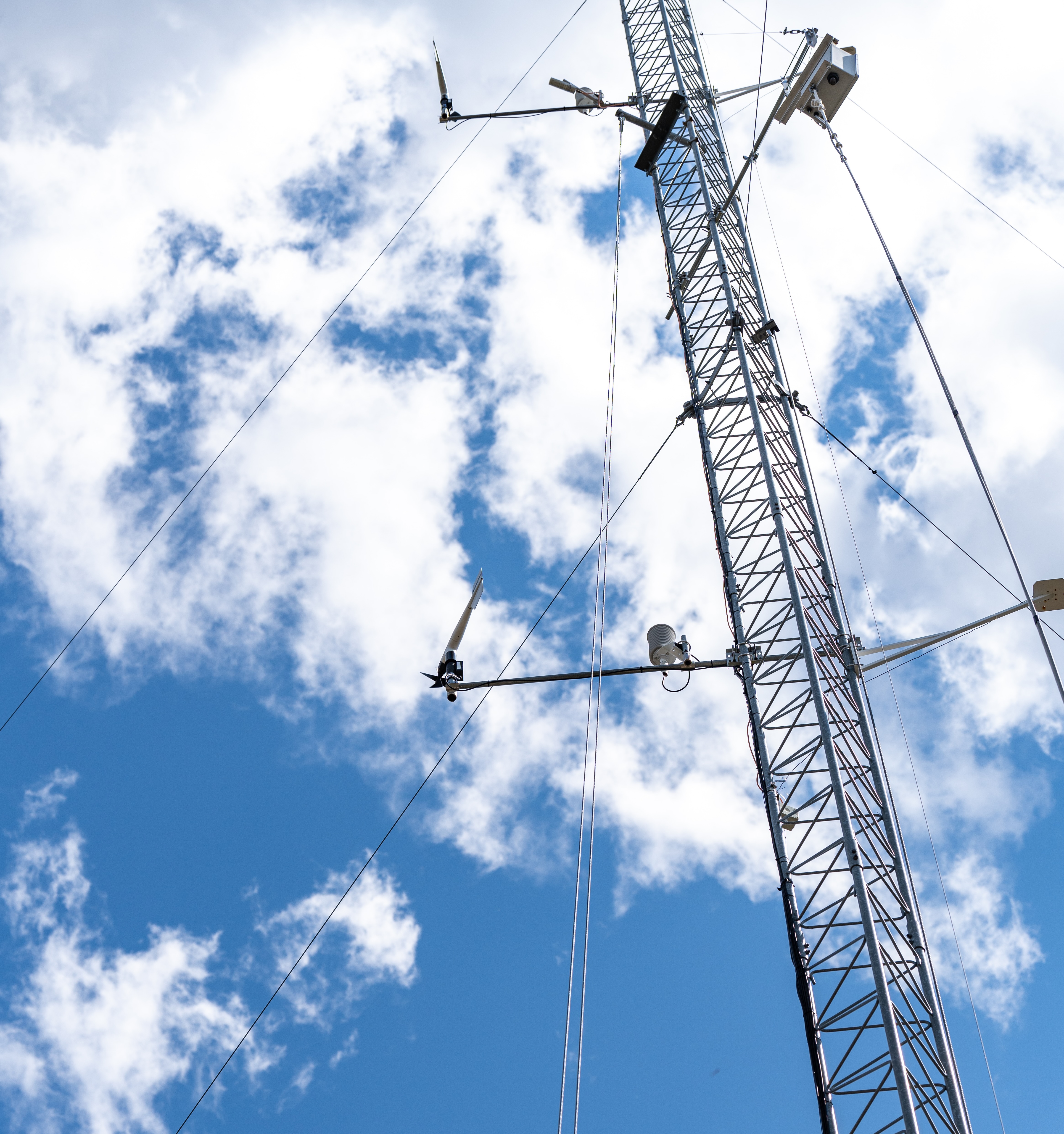
Sensors are placed on 30m tall towers to provide meteorological measurements, such as wind, that are used to calculate deposition patterns.
Sampling equipment that measures ions, such as base cations like calcium and sodium. The equipment is placed in both jack pine forest stands and in nearby open areas.
Sampling equipment that actively pulls in air and measures key atmospheric pollutants. The equipment is placed on tall towers.
Sampling equipment that passively measures key atmospheric pollutants as air flows past a filter. The equipment is placed on tall towers near the denuders.
Sensors are placed on 30m tall towers to provide meteorological measurements, such as wind, that are used to calculate deposition patterns.
Sampling equipment that measures ions, such as base cations like calcium and sodium. The equipment is placed in both jack pine forest stands and in nearby open areas.
Sampling equipment that actively pulls in air and measures key atmospheric pollutants. The equipment is placed on tall towers.
Sampling equipment that measures ions, such as base cations like calcium and sodium. The equipment is placed in both jack pine forest stands and in nearby open areas.
Sampling equipment that actively pulls in air and measures key atmospheric pollutants. The equipment is placed on tall towers.
Sampling equipment that passively measures key atmospheric pollutants as air flows past a filter. The equipment is placed on tall towers near the denuders.
Sensors are placed on 30m tall towers to provide meteorological measurements, such as wind, that are used to calculate deposition patterns.
Sampling equipment that passively measures key atmospheric pollutants as air flows past a filter. The equipment is placed on tall towers near the denuders.
Sensors are placed on 30m tall towers to provide meteorological measurements, such as wind, that are used to calculate deposition patterns.
When we monitor

Sampling timelines depend on the program

Changes to forest may take a long time to occur, so we survey and collect samples from the forest health monitoring sites every 6 years, during the growing season. Since emissions are always changing, we measure deposition year-round.

What we measure

4 key metrics of atmospheric deposition

Atmospheric deposition occurs when pollutants from the air settle on the earth. We track four key metrics of atmospheric deposition:

  • Sulphur Deposition: Compounds that contribute to acidification, often linked to industrial sources.
  • Nitrogen Deposition: Compounds that contribute to acidification or excess growth in vegetation, often linked to industrial sources.
  • Base Cations (BC): Ions such as calcium and sodium that neutralizes the acidity of sulphur and nitrogen deposition. Dust is a source of base cations in the region.
  • Potential Acid Input (PAI): The balance between acidifying compounds (nitrogen, sulphur) and neutralizing substances (base cations). This index is used to estimate how much acid could potentially end up in an area.

The deposition monitoring program measures key air pollutants which enables us to estimate these four key metrics of deposition to the jack pine canopy and forest floor across the region, using calculations and modeling software. These key metrics are then compared to changes observed in the forest health monitoring program. Together these two programs inform our understanding of how atmospheric deposition is impacting forests.